
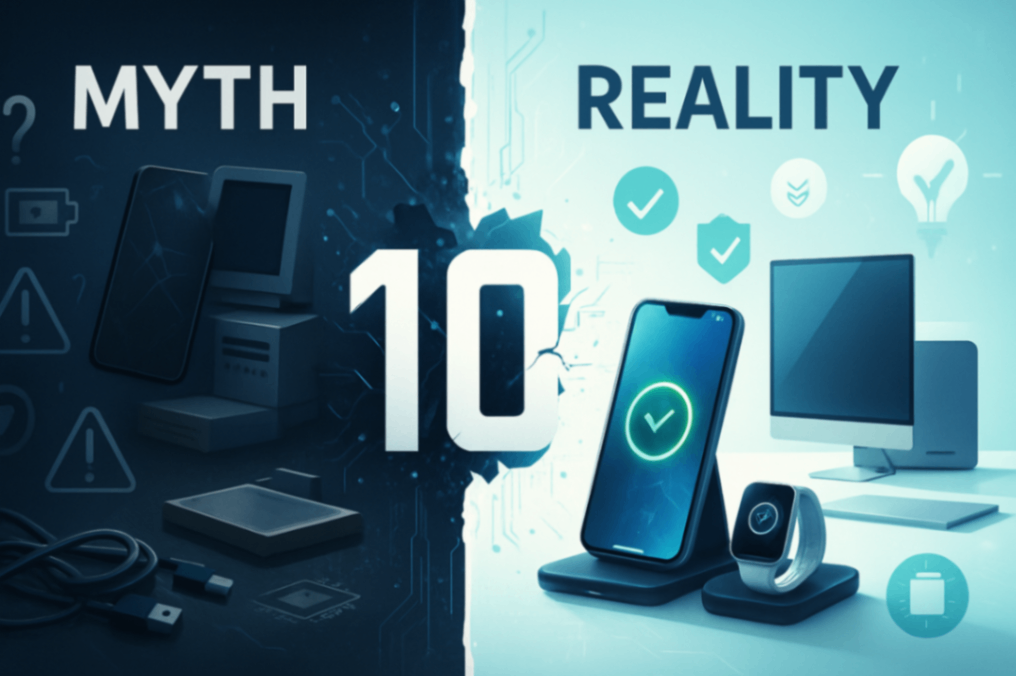
In our rapidly evolving digital world, misinformation spreads almost as quickly as technological innovation itself. From well-meaning advice passed down through generations to marketing misconceptions that have taken root, tech myths can lead to unnecessary worry, poor decisions, and missed opportunities. Let's dive into ten of the most persistent tech myths and uncover the truth behind them.
The Myth: Charging your phone overnight will overcharge the battery and reduce its lifespan.
The Truth: Modern smartphones use lithium-ion batteries with built-in charging controllers that automatically stop charging once the battery reaches 100%. Your phone is smart enough to prevent overcharging. While it's true that keeping a battery at 100% charge for extended periods can cause slight degradation over time, the convenience of overnight charging far outweighs the minimal impact on battery health.
Bottom Line: Charge your phone overnight without worry. The built-in protections make it safe and convenient.
The Myth: A 108MP camera will always produce better images than a 12MP camera.
The Truth: Megapixels only determine resolution, not image quality. Factors like sensor size, lens quality, image processing algorithms, and lighting conditions play much larger roles in photo quality. A well-designed 12MP camera with a larger sensor can easily outperform a 108MP camera with a tiny sensor, especially in low-light conditions.
Bottom Line: Focus on overall camera reviews and sample photos rather than just the megapixel count when choosing a device.
The Myth: Apple computers are immune to malware and viruses.
The Truth: While Macs have historically faced fewer threats than Windows PCs due to their smaller market share, they are not immune to malware. As Mac adoption has grown, so has the development of Mac-specific malware. macOS does include robust security features, but no system is completely bulletproof.
Bottom Line: Mac users should still practice good security hygiene, including keeping software updated and being cautious with downloads and email attachments.
The Myth: To maintain battery health, you should always let your device's battery drain to 0% before charging.
The Truth: This advice applied to older nickel-cadmium batteries, which suffered from "memory effect." Modern lithium-ion batteries actually prefer partial discharge cycles. Regularly draining your battery to 0% can actually stress the battery and reduce its lifespan.
Bottom Line: Charge your devices whenever convenient. Keeping the battery between 20-80% is ideal for longevity, but don't stress about it too much.
The Myth: Using private or incognito browsing mode makes your internet activity completely anonymous and untraceable.
The Truth: Private browsing only prevents your browser from storing local history, cookies, and form data. Your internet service provider, websites you visit, network administrators, and government agencies can still track your online activity. It's "private" from other users of your device, not from the broader internet.
Bottom Line: For true online privacy, you need additional tools like VPNs, Tor browsers, or other privacy-focused technologies.
The Myth: Force-closing apps running in the background will improve battery life and performance.
The Truth: Modern mobile operating systems are designed to manage background apps efficiently. When you force-close an app, you're actually making your phone work harder the next time you open it, as it has to reload everything from scratch. iOS and Android suspend background apps automatically and only allow essential processes to continue.
Bottom Line: Let your phone's operating system manage apps naturally. Force-closing apps typically wastes more battery than it saves.
The Myth: Premium, expensive HDMI cables provide better picture and sound quality than cheaper alternatives.
The Truth: HDMI is a digital signal, which means it either works or it doesn't—there's no "better" digital signal. A $5 HDMI cable will provide exactly the same picture and sound quality as a $100 cable, assuming both meet the required specifications for your devices. The only real differences might be build quality and durability.
Bottom Line: Buy the cheapest HDMI cable that meets your technical requirements (4K, HDR, etc.). Your wallet will thank you.
The Myth: The more RAM your computer has, the faster it will run.
The Truth: RAM is like a workspace—having more is only beneficial up to a point. If you're not using all your available RAM, adding more won't improve performance. Most users will see diminishing returns beyond 16GB for general use, and many can work comfortably with 8GB. The type and speed of RAM, along with other components like your processor and storage drive, also significantly impact performance.
Bottom Line: Assess your actual RAM usage before upgrading. More isn't always better if you're not utilizing what you already have.
The Myth: Wireless charging generates too much heat and will damage your phone's battery faster than wired charging.
The Truth: While wireless charging does generate more heat than wired charging, modern phones and wireless chargers have thermal management systems to prevent damage. The convenience of wireless charging often outweighs the slightly reduced efficiency. Quality wireless chargers from reputable manufacturers are safe for daily use.
Bottom Line: Use wireless charging if you find it convenient. Choose quality chargers and ensure proper ventilation to minimize any heat concerns.
The Myth: Constantly turning your computer on and off will wear out the components and reduce its lifespan.
The Truth: Modern computers are designed to handle thousands of power cycles. The thermal stress from powering on and off is minimal compared to the stress of running continuously. In fact, leaving your computer on 24/7 can cause more wear due to constant heat generation and fan operation, plus it wastes energy.
Bottom Line: Turn off your computer when you're not using it for extended periods. It's better for the environment and your electricity bill, and it won't harm your hardware.
Technology myths often persist because they contain a grain of historical truth or seem logical on the surface. However, as technology evolves, many old rules no longer apply. The key to navigating our digital world is staying informed about current technology rather than relying on outdated advice.
Remember: when in doubt, consult reputable tech sources, manufacturer documentation, or trusted tech professionals rather than relying on social media posts or well-meaning but uninformed advice. Understanding the facts behind these myths not only helps you make better decisions about your technology but also saves you from unnecessary worry and expense.
Stay curious, stay informed, and don't be afraid to question conventional wisdom—especially when it comes to technology that's constantly changing and improving.
Related Topics:
Did you enjoy this article?